
Armour that
follows the hull.
Two days of capital-ship work: every greeble on the TCS Victory questioned, armour plates that follow the shape of the hull, and six Kilrathi capital ships rebuilt in a harder, sharper language.
Every greeble, one question at a time
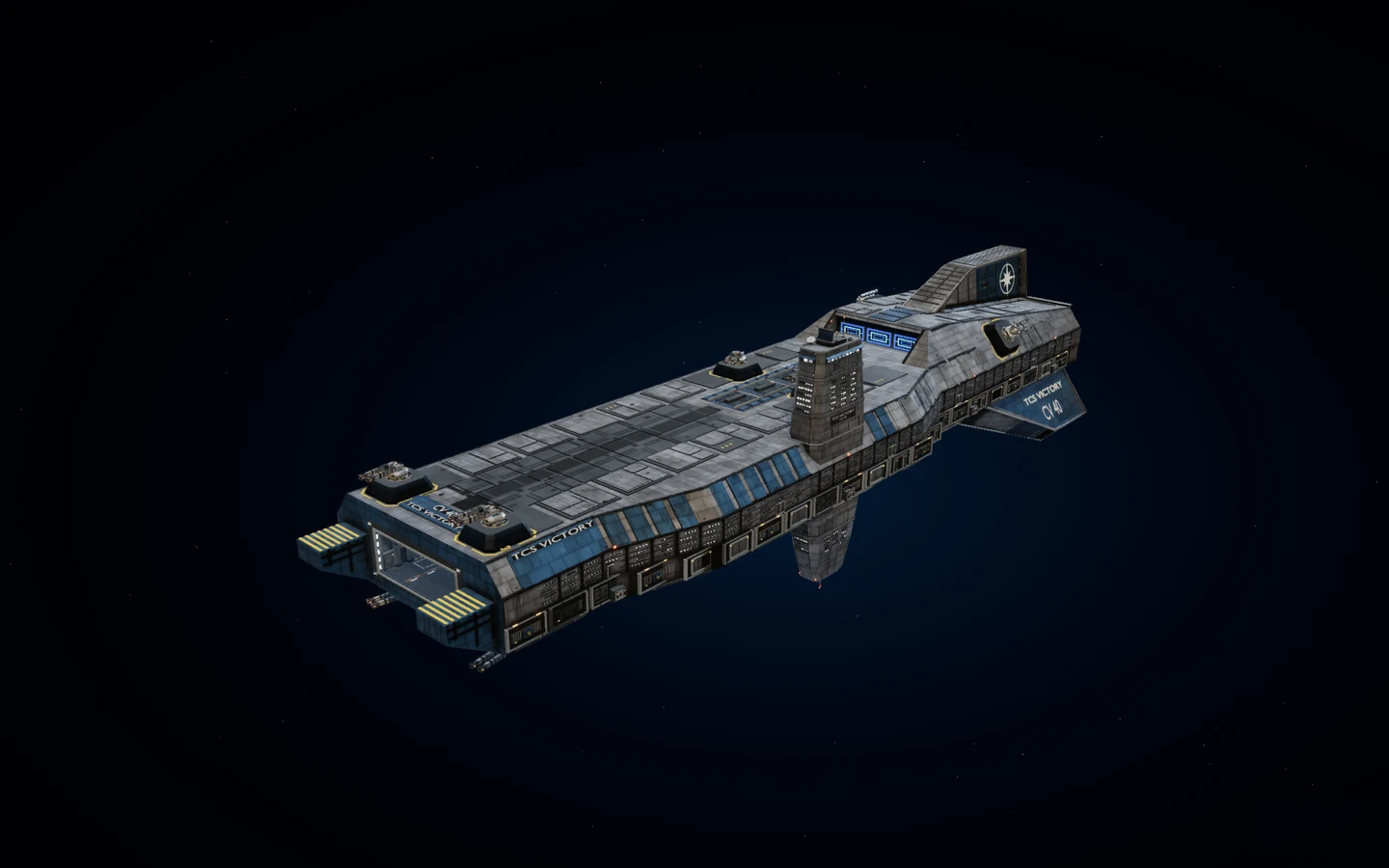
On 5 November Avon went over the TCS Victory, the carrier you fly from, and set three tasks. The first: “review every greeble, ask what is this supposed to be, does it look good and what can we do to improve it”. The second: “make plates look like real armor plates and deliver tech we can bring to other capships”. The third was a specific fault: the lower side panels did not follow the curve of the port sponson.
A review of every greeble needs a list of them. The Victory is built by a script, and every part passes through a single function on its way into the mesh, so we logged each part there: 21,007 exterior parts, made by 343 different builder functions, each traceable to the function that made it.
Every complaint then became a measurement that failed before the fix and passes after it. Parts that did not fit the port flank went from 214 to 4; plates hanging over the edge of the aft deck went from 6 to 0. Each fix went into the source module that builds the part, not into the exported model, so the next build keeps it.
Real armour, shared tech
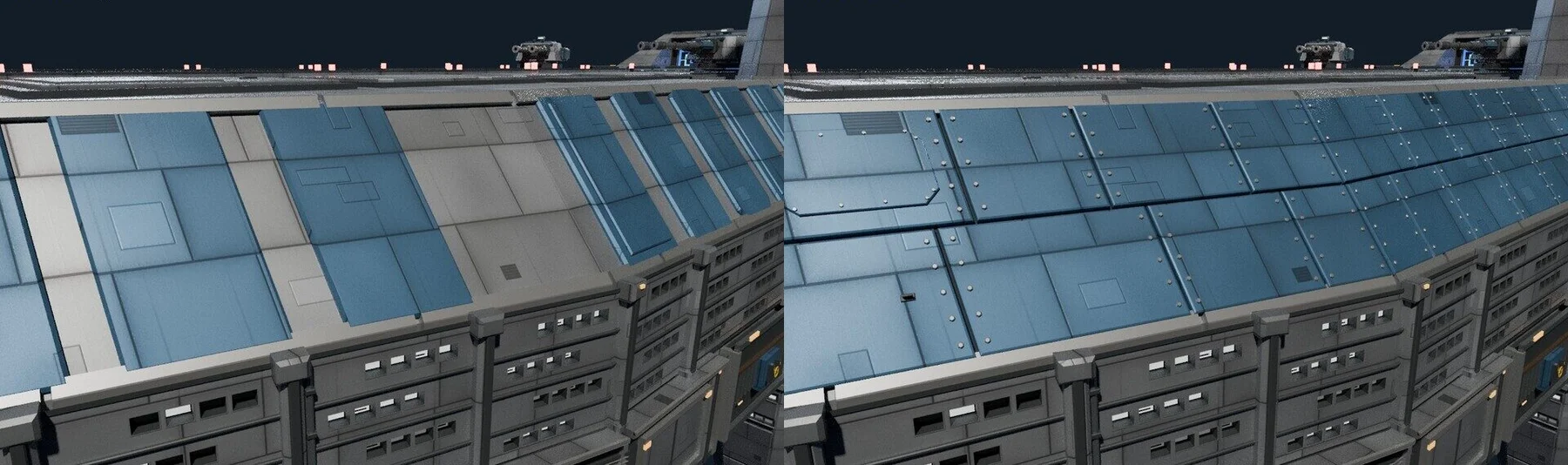
The armour now comes from a shared module, capship_armour, that lays plates the way real armour is built: staggered strakes whose joints sit on the hull's knuckles, dark backing at the seams, plates with rolled edges, bolted butt joints and doublers. Along the port flank the parts are bent onto the sponson instead of running straight past it.
The same pass removed overhanging bars at the stern and added detail with a job to do: coolant stations on the belly, round escape-pod hatches and tether winches. Avon's verdict on the result: “It looks amazing”.
Following the shape
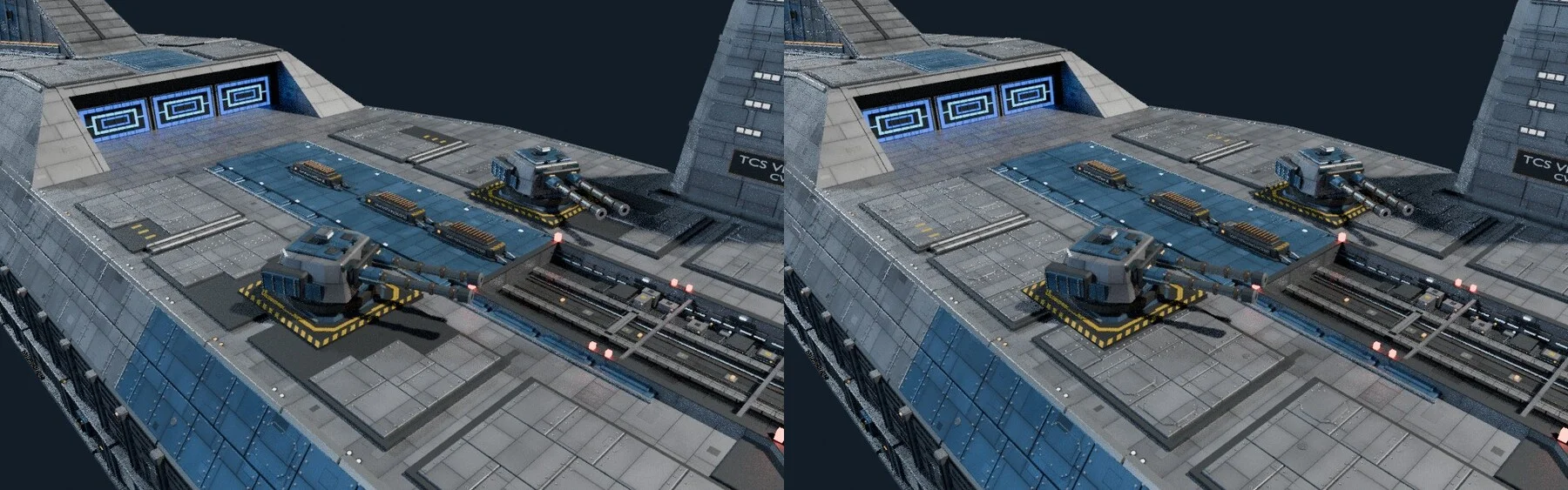
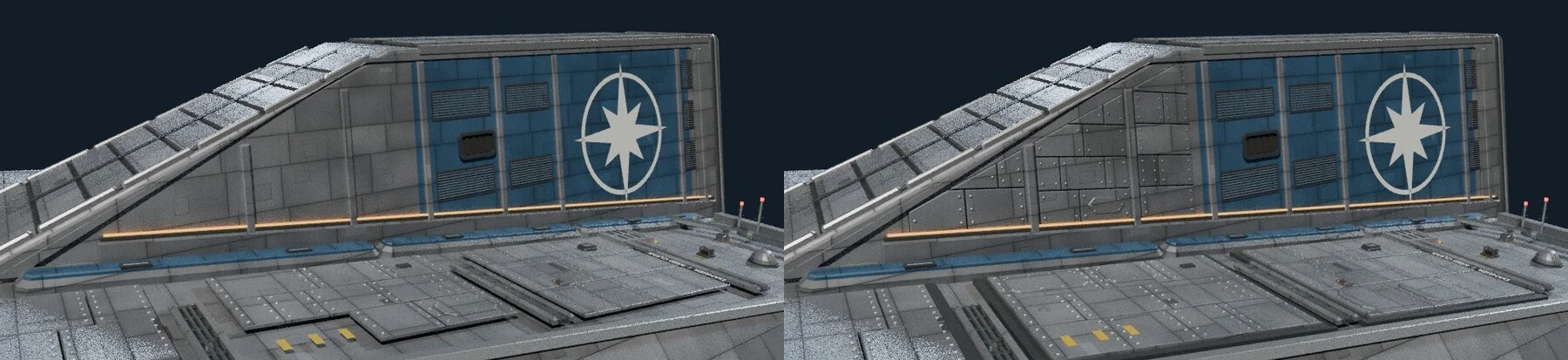
On 6 November Avon asked for the next step: “armor panel shapes follow the hull shape (for example with triangle shapes)”. A rectangular grid laid over a triangular face reads as wallpaper; plates cut to the face read as armour.
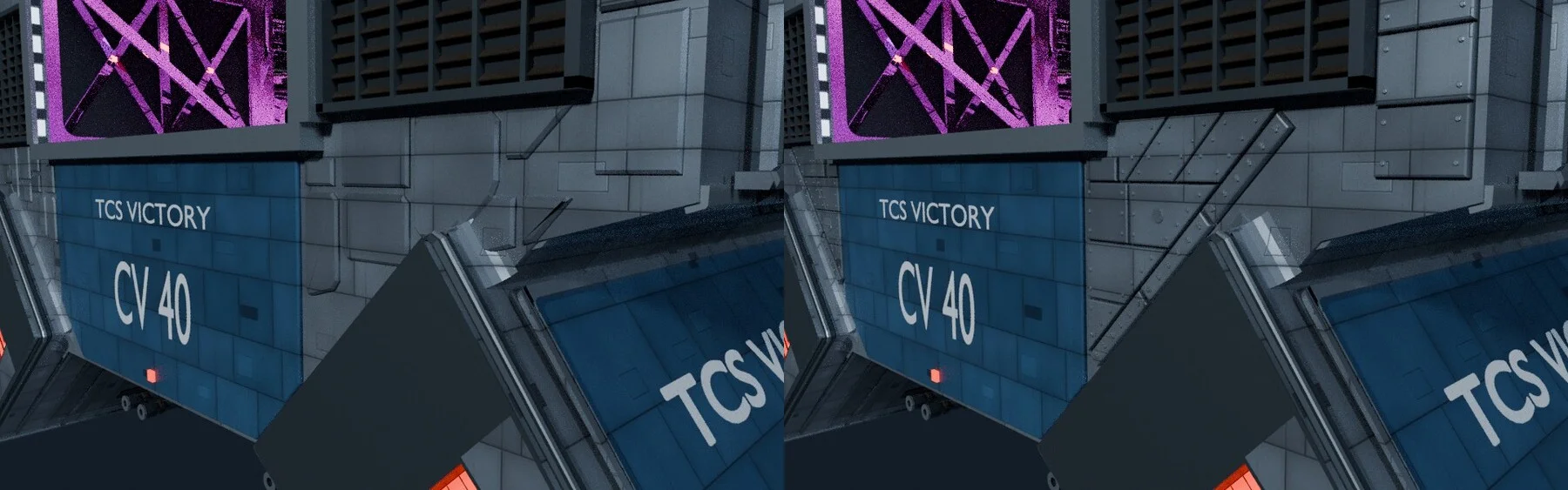
The lower stern triangles are now plated as triangles, finished with a bolted titanium hem. On the top nacelle the cheek plates are laid along the line of the ramp. The turret pads have fitted collars, and the chevron markings sit on continuous plates instead of breaking across joints.
Checking the mesh
More plates means more places for faults that only show up close: stray triangles, specks (tiny detached fragments) and z-fighting, where two surfaces occupy the same space and flicker as the camera moves. We built an automated mesh audit that finds all three.
On the Victory's exterior, visible z-fighting sites went from 120 to 10, and specks from 9 to 0. The same audit was then run on each of the Kilrathi ships below.
The Kilrathi fleet: claw-2
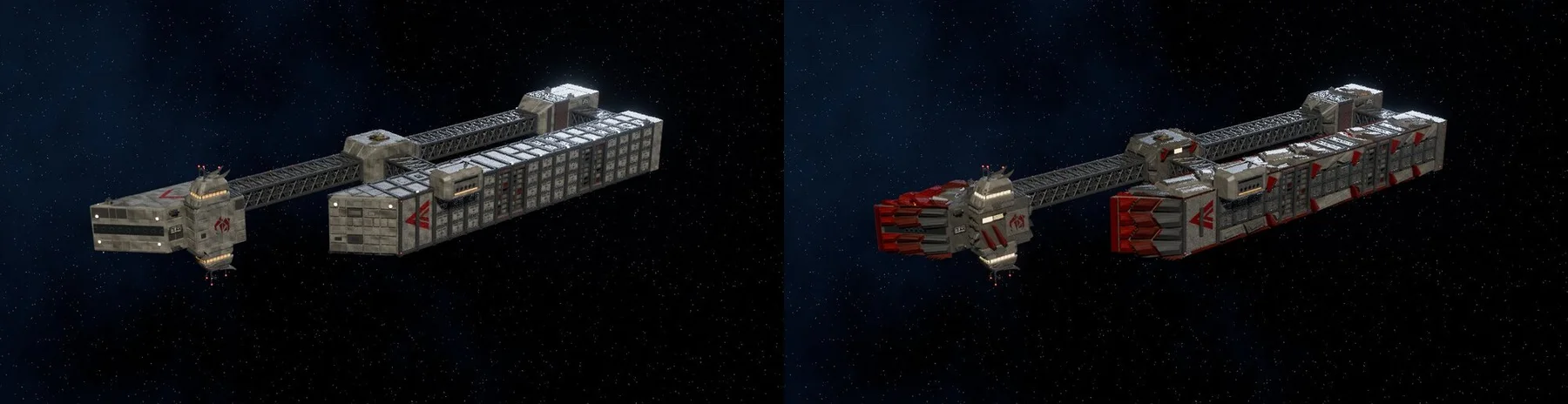
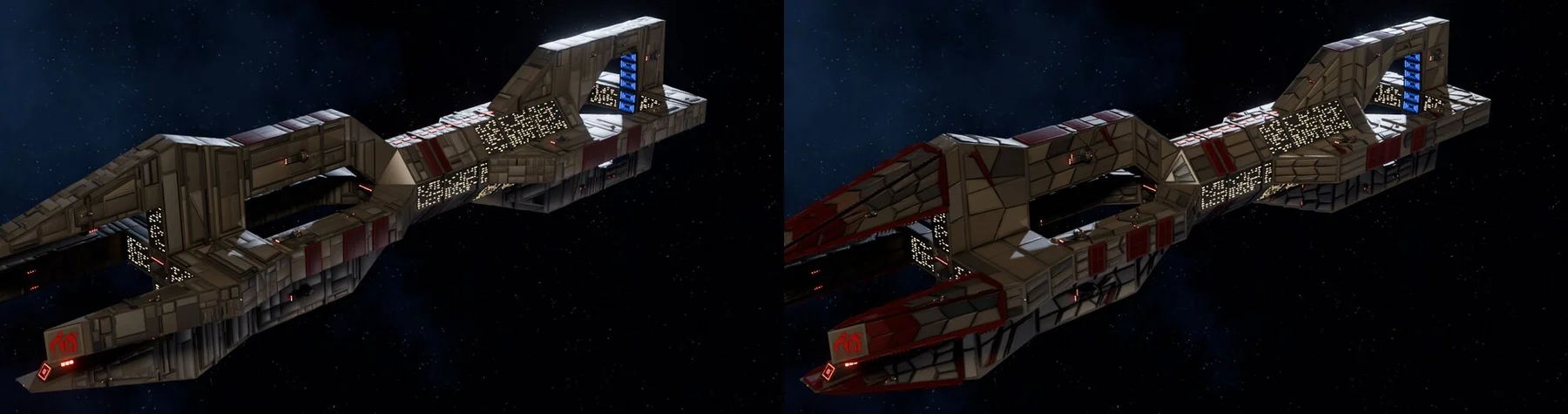
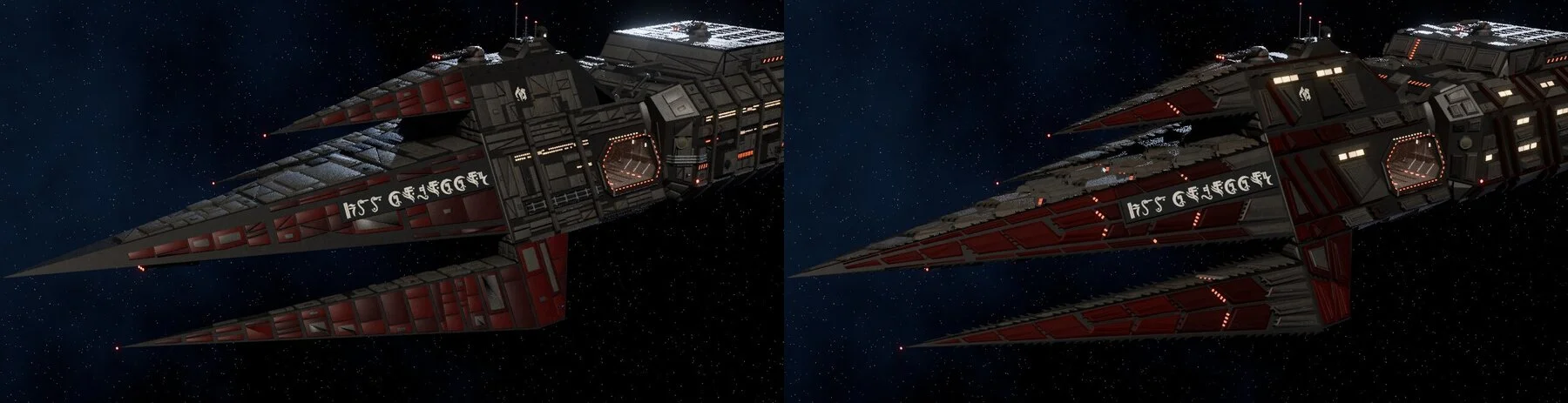
Avon's notes on the Kilrathi capital ships were blunt: “way less greebling and more slabs of aggressive armor”, and “follow the shapes and have close up detail. So no squares in a large triangle shape. The ship needs to look tough and threatening”. From a set of prototypes on the destroyer, he picked “claw 2”.
Six NPC ships were then rebuilt in that language in parallel, each by its own agent: the dreadnought (3,230 m), the cruiser (1,080 m), the carrier (920 m), the destroyer (450 m), the transport (300.8 m) and the corvette (110 m). An independent design-review agent reviewed every ship against 12 fleet rules. Among them: armour lanes converge on the tips; rake, not upright posts; every segment ends in a blade; colour steps from crimson to dark only at seams; windows sit in recessed amber wells; and the few greebles left have a function.
The mesh audit came along too. On the dreadnought's armour, z-fighting fell from 2,329 sites to 1.
After seeing the six ships live, Avon added a rule that now heads the list: the ships must look welded together, not stacked like toy bricks (more on that below).
Where things stand
All six claw-2 Kilrathi capital ships went live in the browser showroom on 6 November. They are NPC ships, and the game still flies the older hulls until they are imported.
The Victory's showroom model now carries the shape-following plates: the stern triangles, the ramp plates and the turret-pad collars. The nacelle cheek plates are detail of the full game model only; the image at the top of this post and the homepage show that full model, with the new turret kit described below. Neither Victory armour round is in a playable build yet: the first is queued for import into the Unreal game, and the second follows it.
After seeing the six Kilrathi ships live, Avon wrote: “the capships need to look welded together, now they tend to look like lego”. That is now the top fleet rule: flush plates with weld seams, fillets where parts meet, continuous structure, and no stacked blocks with gaps. He likes the dreadnought's panelling best (“they fit and do not look messy”), and the cruiser, destroyer and transport are being reworked toward it, as is the Ralaxath heavy destroyer.
The capital-ship turret kit is getting shorter, heavier barrels with more detail. Avon has approved it; the image at the top of this post already shows it on the Victory, and the showroom and the game get it later.
Also still in progress: Avon has chosen amber windows with a real dim tier and the transport's crimson finish for the whole Kilrathi fleet, and the corvette at 120 m. The Confederation capital ships, the Southampton, Tallahassee/Ajax and Clarkson, are in their third armour round, moving to the Victory's titanium grey with finer 0.15 m joints. None of the work in progress is published yet.
Take a look around
See the Kilrathi fleet and the Victory in the browser showroom, or help support the work on Victory.